
Membership Required
 This Content is Reserved for Members
Project Contributors:
 If you have an account login by clicking on the key.
- If this page is from a failed login you can Try Again
- If you do not yet have an account register for one now
- Problems or Questions? - Contact Us
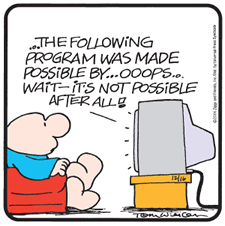
Ever wonder what would happen to resources like public or community radio/tv, or many internet resources, if they were not made possible by underwriters?
They would need to either rely entirely on the your support as an individual or to stop offering the resource.
The Avalanche Center is not supported by any corporate or government underwriting. About 90% of our break-even (at best, and often negative) budget comes from individual contributions and store sales. All labor is donated - including server administration, website development, content expertise, fundraising and bookeeping, etc.
There are benefits of this approach to you, even though the project is chronically broke. First, we are unbiased. Our content is not written for "monetization" - it does not sell our products, sponsors products, or anyones products. It is also not written to create any sense of "funding hype" to increase public funds, which we do not receive. Second, we have no annoying pop-ups. You do not need to constantly play "whack-a-mole" here. If you appreciate these benefits then please donate to our 501c3 project.
While the project is not made possible by any underwriting we don't believe it should be "not available at all". There are many additional benefits for members, and while the simplest way to join is to contribute $25 or more there are other ways to become a member as well. Such as making any purchase with a check-out cart value over $100.
Benefits for members are constantly being updated but currently include: full access to searching and sorting incidents, access to incident report pages, some more detailed and advanced educational resources, free and discounted online classes in our Avalanche Institute, and an automatic discount on all store purchases. Perhaps the largest benefit is knowing that you are helping keep this community service site available at all.
There are several ways to gain access:
- Contributed $25 or more for this season. - Contribute Now!
- If you are a member but haven't registered a website account. - Sign Up Now!
- If you logged in using a small pop-up box and got this - Reload the page now
- If you have used an incorrect name and/or password or your session is expired - Try Again
Problems or Questions? - Contact Us

